This is a screen-by-screen tour of the AI crawler tracker. It shows which AI bots read your site, which of those visits are verified as real, and which people arrive from ChatGPT, Perplexity, Gemini and Copilot. By the end you'll know what every chart, column and badge means, and what to do about it.
- Where in the app
- Your site, then the AI tab
- Plan
- Free on every plan
- Time it takes
- About 5 minutes to set up
- What you need
- One snippet, the WordPress plugin, or a log file
- Works on
- PHP sites, WordPress, Cloudflare
Three screens, one picture
The tracker has three tabs, and each one gets its own section below.
Google Analytics can't show you any of this. Analytics runs in the visitor's browser, and bots never run that code. The tracker records each visit on your server instead, before the page is sent, so nothing slips past it. It reports the visit after your page has gone out, so neither people nor crawlers wait.
Tab 1: AI crawlers
This is the screen you land on, so we'll start at the top of it.
The KPI strip
Across the top is a row of headline numbers. The biggest is Crawler visits, which reads 184,151 in the example for example.com. It counts every visit from a known AI or search crawler in the period you're looking at.
Right under it is a per-bot list, one line and one count per crawler, so you can see who does the most reading. On most sites Googlebot and Bingbot sit near the top, with GPTBot, OAI-SearchBot, ClaudeBot and PerplexityBot below them.
Here's what I look at first. Not the big total, but whether the AI search crawlers are on the list at all. If OAI-SearchBot or PerplexityBot is missing, that is the first thing to fix.
AI crawler visits per day
Below the strip is a daily chart covering the last 30 days. Each day is split into two kinds of visit:
- Search and user requests come from crawlers that feed live AI answers, like OAI-SearchBot, PerplexityBot and Claude-SearchBot, plus fetchers like ChatGPT-User that open a page because a person just asked a question.
- Training visits come from crawlers like GPTBot and ClaudeBot, which collect text that may be used to train future models.
Search and user requests decide whether you show up in AI answers today. Training visits shape what models know later.
The Crawlers table
Further down is the table where you'll spend the most time. Each row is one crawler, with these columns:
- Name. The crawler's user agent, such as GPTBot or PerplexityBot.
- Company. Who runs it: OpenAI, Anthropic, Perplexity, Google, Microsoft, Apple, Amazon and others.
- Visits. How many requests it made in the period.
- Pages. How many different pages it read. A crawler with many visits but few pages keeps rereading the same ones.
- Verified badge. A green Verified badge means the visits came from addresses the company publishes for that bot. The next section explains how that's checked.
- Last seen. When it last came by. If a crawler you care about hasn't been seen in weeks, something may be blocking it.
What the Verified badge means
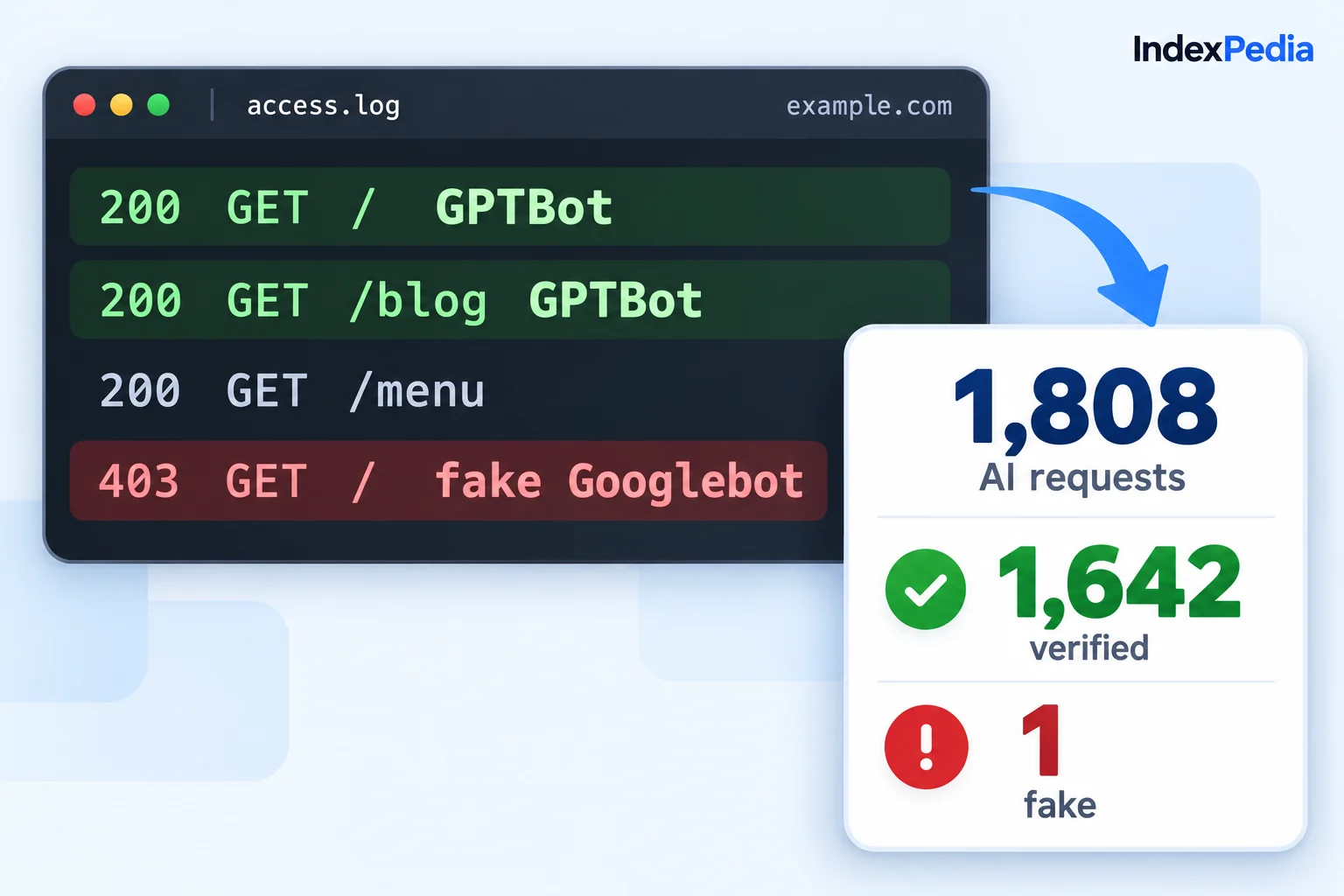
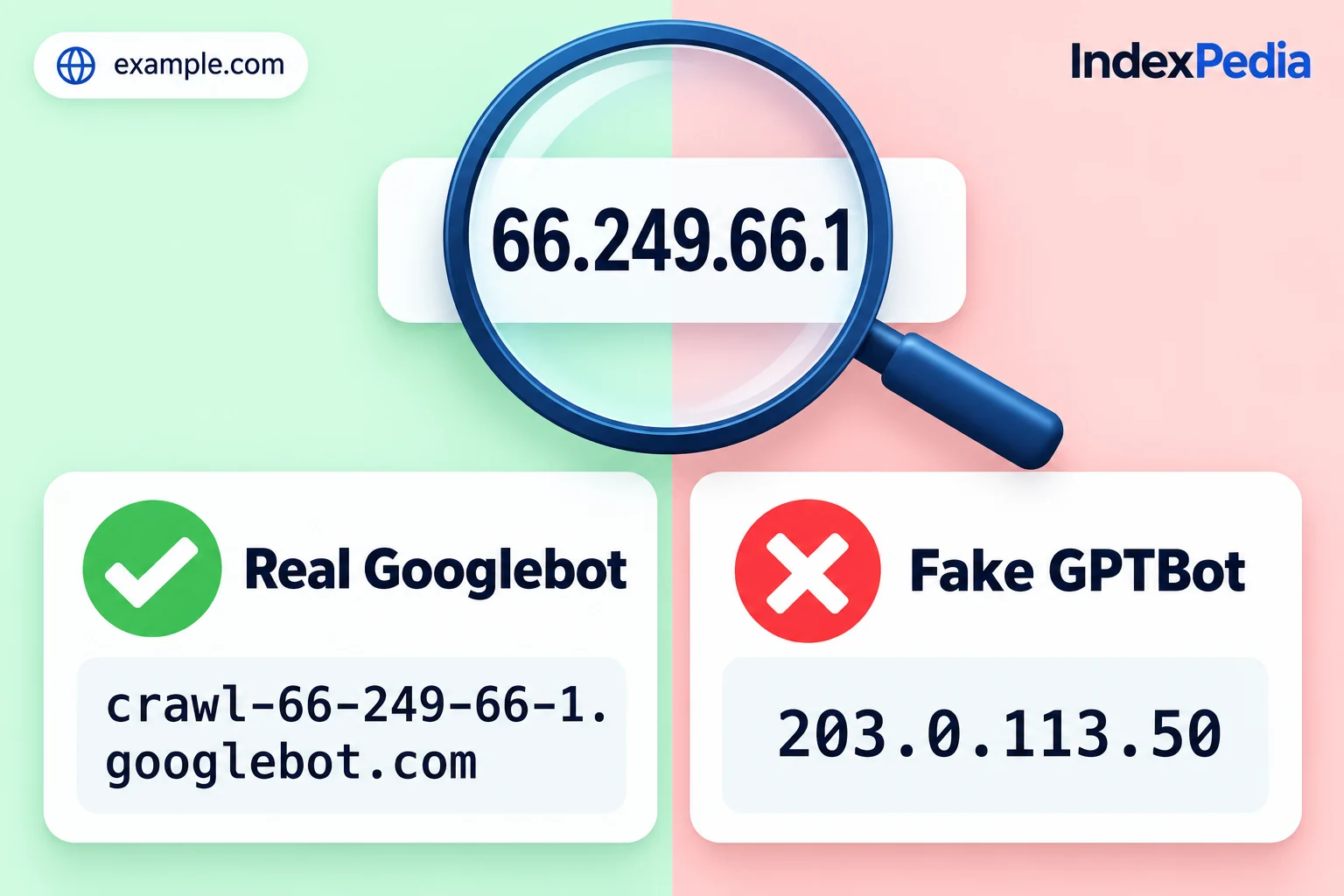
Anyone can send a request that says "I am GPTBot", because the name is just text. The tracker therefore checks each visit's IP address against the list the crawler's owner publishes. OpenAI, Perplexity, Google, Bing and Apple all publish these lists. For crawlers verified by host name, like Googlebot, it uses a reverse and forward DNS check, which is the method the owners recommend.
Here's what that check looks like for one visit. The address 66.249.66.1 resolves to crawl-66-249-66-1.googlebot.com and sits on Google's published list, so it's the real Googlebot. The tracker runs this check automatically on every visit, so the counts in the table are real crawlers and leave out imitations. You can check any address by hand with the free Bot checker, and our guide on telling real Googlebot from fake bots shows a real and a fake result side by side.
See which AI crawlers read your site, every day
Tab 2: Visits from AI
The second tab is about people instead of bots.
Visits per day
The top chart has a bar for each day, showing how many people clicked a link inside an AI answer and landed on your site. These are the visitors that being crawled can eventually bring you: real people, sent by an AI tool.
The tracker finds these visits from the referrer, the page the visitor came from. When someone clicks a link in ChatGPT and lands on your menu page, it's counted here.
By AI tool
Next to the chart, a list breaks those visits down by source: ChatGPT, Perplexity, Gemini and Copilot, with the number of people each one sent you.
If ChatGPT sends most of your visits, check how ChatGPT describes your business. The AI visibility check asks ChatGPT search about your business and shows what it says.
Pages people land on
The last block lists the pages these visitors arrived on, with a count for each. For Golden Crust Bakery, a bakery in Raleigh, NC, you'd hope to see the sourdough page, the catering page and the order page here. If one of them is out of date, update it and add a clear button to call, order or visit.
Don't worry if this tab is quiet at first. Plenty of sites see crawler visits long before they see people from AI. The crawl comes first, the clicks follow.
Tab 3: Page funnel
The third tab joins the first two together, one page at a time.
The stages
Before a page earns a visitor from AI, an AI crawler has to read it, an AI tool has to use it to answer someone, and a person has to click through. The table shows each page as a row and each stage as a column, with a green check where the page reached that stage.
A row that stops early shows you where that page gets stuck.
Filter chips
Above the table is a row of filter chips. Clicking one narrows the list to a group of pages, so you don't have to scroll through all of them. It's the quickest way to find pages that were crawled but never reached a person.
Reading the gaps
These are the most common patterns and what they usually mean:
- If the first stage has no check, no AI crawler has read the page. Link to it from your menu or home page, make sure it's in your sitemap, and check that robots.txt isn't blocking it. A Site Scan catches blocked and orphaned pages in one go.
- If the page was crawled but nothing came after, AI tools can read it but aren't using it. That's usually a content problem: a thin page, no clear facts, or nothing that answers a real question.
- If the page was used but got no visits, it shows up in answers but people don't click. A clearer title and description often help.
Every feature at a glance
Recognizes OpenAI, Anthropic, Perplexity, Google, Bing, Apple, Amazon and more, by user agent
You see every bot that reads you, including the less famous ones
Checks each visit against the IP lists the owners publish, or by reverse DNS
Your numbers count real crawlers and leave out scrapers using their names
Shows 30 days of visits, split into search and user requests versus training
You can tell if AI search is reading you more or less over time
Counts people who clicked through from ChatGPT, Perplexity, Gemini and Copilot
You see which AI tools send real customers
Lists pages per crawler and pages no crawler reaches
You know where to add links or improve content
Tracks each page from crawl to answer to visit, with a check per stage
You can see the stage where a page gets stuck
Reads an existing access log to fill in history
You see the weeks before you installed anything
Reports each visit after the page has been sent, with a short timeout
Visitors and crawlers never wait
Setting it up
You don't need a developer. Add your site to a free IndexPedia account, then paste one small snippet into your site. There's a version for PHP sites, a WordPress plugin, and a Cloudflare Worker if your site runs behind Cloudflare. The snippet runs on your server, so it sees crawlers that never run JavaScript.
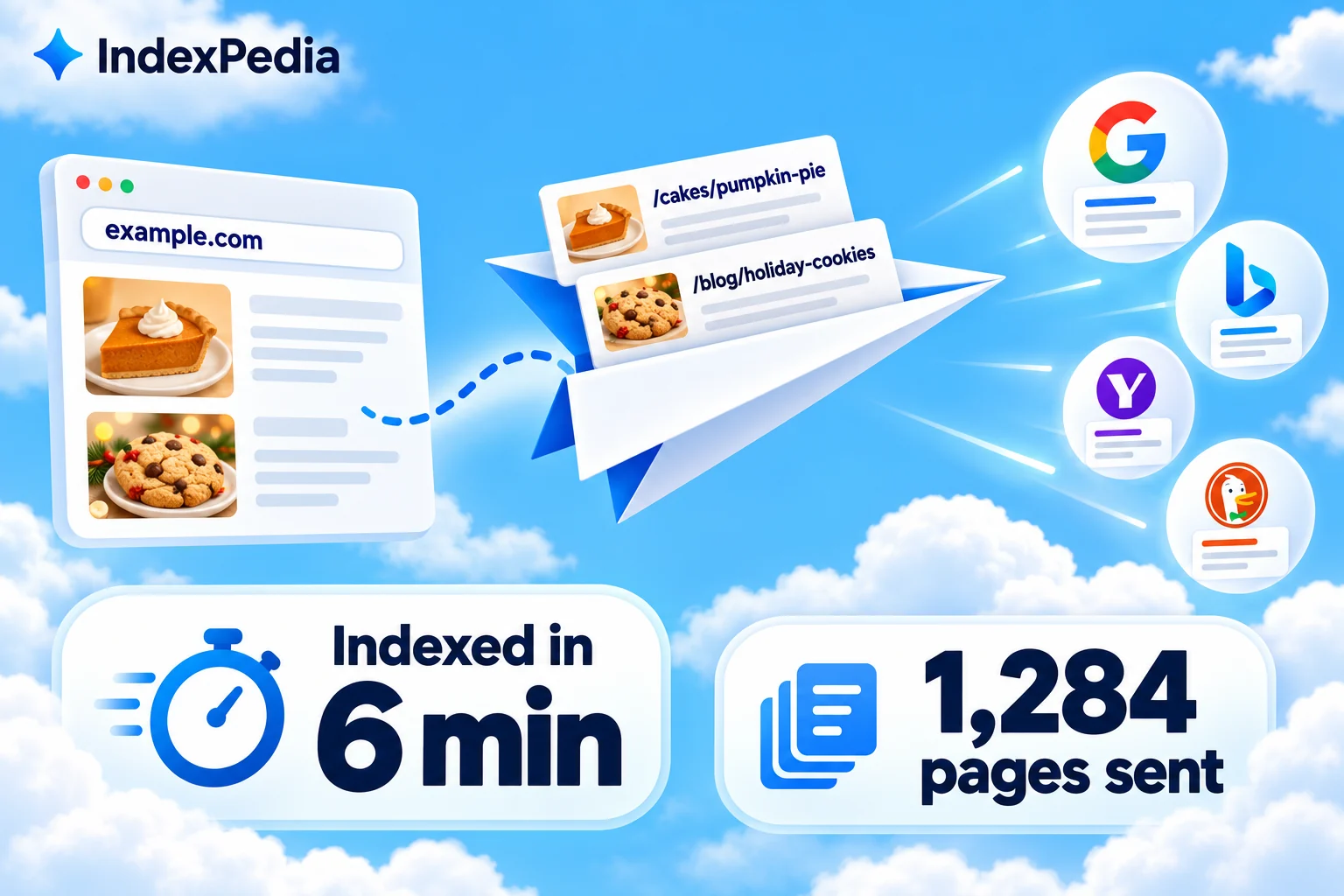
To see the past as well, upload an access log and the tracker fills in history from the file. For a one-time look without installing anything, the free Log Analyzer reads a log on its own. Our walkthrough on how to read your server logs for AI bots goes through that report section by section.
Upload a log on day one. The snippet only sees visits from the moment it's installed, but your server log already holds the last few days or weeks.
What this means for Golden Crust
Golden Crust sees which AI tools send real customers to the catering and order pages, and which pages bring in nobody, so time goes into the pages that earn money.
Pages no AI crawler reaches, crawlers blocked by a security plugin, and pages read but never used all show up in one place, each with a next step.
AI search crawlers keep making verified visits to the right pages, and blocking only fake bots keeps the real ones coming back.
The crawler reference
These are the crawlers you'll meet most often in the Crawlers table, who runs them, and what each one is for.
| User agent | Company | Purpose |
|---|---|---|
| OAI-SearchBot | OpenAI | Finds pages for ChatGPT search results |
| ChatGPT-User | OpenAI | Opens a page live when a ChatGPT user asks |
| GPTBot | OpenAI | Collects pages for model training |
| Claude-SearchBot | Anthropic | Finds pages for Claude search answers |
| ClaudeBot | Anthropic | Collects pages for model training |
| PerplexityBot | Perplexity | Builds the index behind Perplexity answers |
| Googlebot | Google Search and AI Overviews | |
| Bingbot | Microsoft | Bing search, which also powers Copilot |
| Applebot | Apple | Siri and Spotlight search |
| Amazonbot | Amazon | Alexa answers and Amazon services |
| DuckAssistBot | DuckDuckGo | DuckDuckGo AI answers |
If you're thinking about blocking, note that blocking a training crawler like GPTBot doesn't remove you from ChatGPT search, which uses OAI-SearchBot. Most small businesses allow at least the search crawlers, because those decide whether you appear in AI answers at all.
See which AI crawlers read your site, every day
FAQ
Why can't I see AI crawlers in Google Analytics?
Analytics tools run JavaScript in the visitor's browser and filter bots out on purpose. AI crawlers fetch the page and leave without running that code. The tracker records visits on your server, where every request is seen.
What does the Verified badge in the Crawlers table mean?
The crawler's visits came from IP addresses its owner publishes, or passed the owner's reverse DNS check. Visits that use a famous name from other addresses aren't counted as verified, so your numbers stay accurate.
What's the difference between search and user requests and training in the daily chart?
Search and user requests come from crawlers that feed live AI answers, plus fetchers that open a page because a person just asked. Training visits collect text that may be used to train future models. Only the first kind decides whether you appear in AI answers today.
Why is the Visits from AI tab empty?
Visits from AI only appear once a person clicks a link in an AI answer, and many sites get crawled for a while before that happens. Check the Page funnel tab to see which pages are being read and where they stop.